I was paid a wee bit to write this review, but just like with all things from The WOLFe Pack, what you will find here is an honest opinion from a seasoned homeschool mom with a Master’s Degree in Education and a decade of experience in the classroom…who also happens to be a mom with way too little sleep, too many dishes to do and only 9 months left on her homeschool clock.
Please read our Disclosure Policy for details.
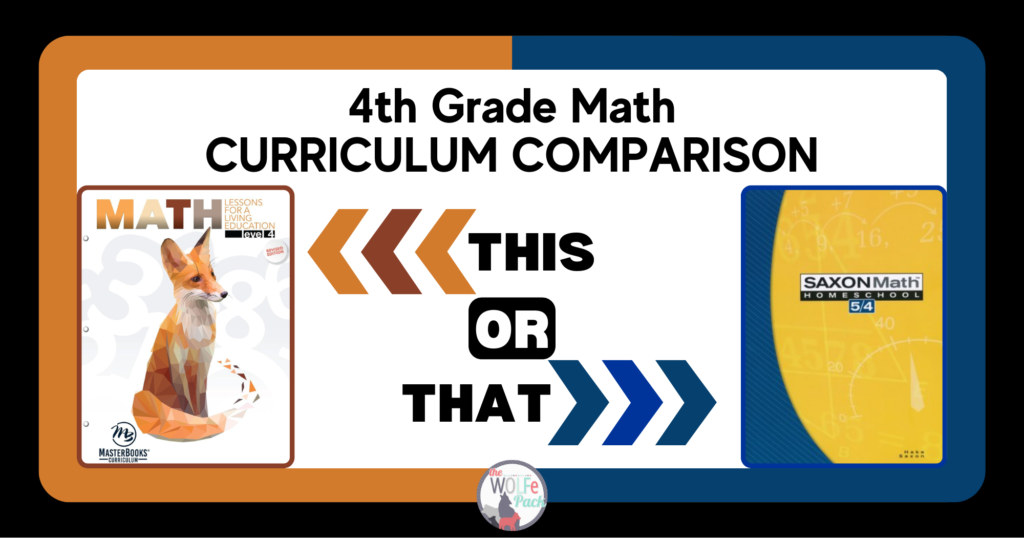
CURRICULUM COMPARISON for Fourth Grade Math – Master Books and Saxon
If you have read much of my stuff or know much about me, you know that our homeschool math journey was very twisty and turny with loads of screams and tears that took us through 8 different math curriculum. But, at the end of that not-so-fun journey was the perfect math option for us: Saxon Math with Nicole the Math Lady.
As a matter of fact, I love the combo of Saxon and NTML so much that I have worked for her since 2020.
But, I do not believe for one second that Saxon Math is the right fit for everybody.
By a long shot.
It’s good math. There’s no doubt about that. But, there are several good math options available to homeschoolers. And, one of the best things about homeschooling is that we get to cater to each and every kid for each and every subject for each and every year! It’s also one of the hardest things about homeschooling. It’s not just that we get to pick and choose what works for our kids.
It’s our responsibility.
It is our responsibility to choose the best math curriculum for our kids.
So, how do we do that?
Buy a bunch to try out and waste a ton of money and several years?
That was my approach but I don’t recommend it.
A better option is to do research which can come in the form of attending conventions, interviewing experienced homeschoolers, reading articles online and more.
Today, we are going to compare two math options. NOT to see which one is superior. But, to see which one might be better for your kiddo.
So, let’s get started.

APPROACH
- Saxon Math:
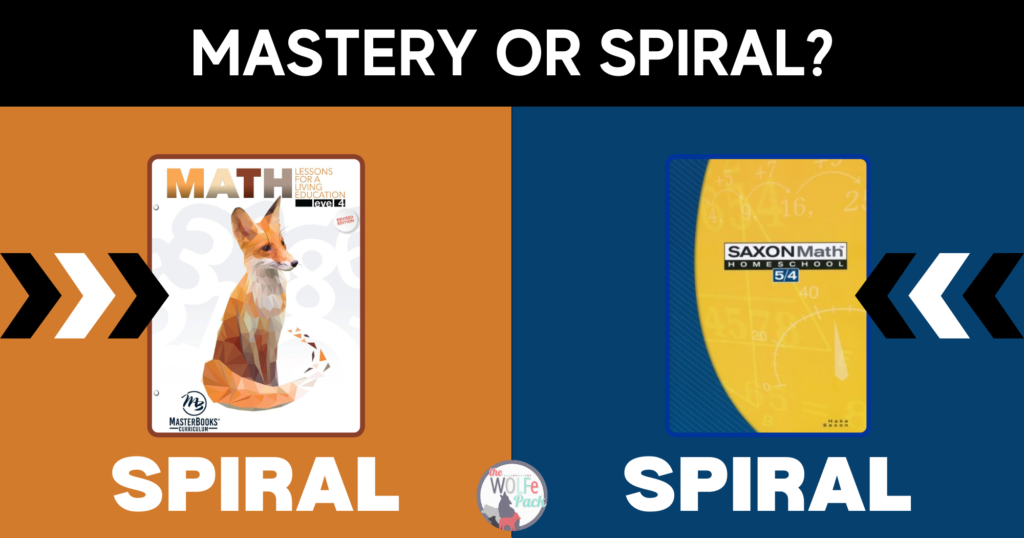
- Spiral: Students encounter concepts multiple times throughout the curriculum, each time with increasing complexity.
- Incremental and Cumulative: Introduces new concepts gradually with frequent reviews of previously covered material.
- Master Books:
- Spiral: Students encounter concepts multiple times throughout the curriculum with some growth in complexity.
- Story-based with Biblical Integration: Introduces each lesson with a story with a biblical worldview.
APPEARANCE
- Saxon Math:
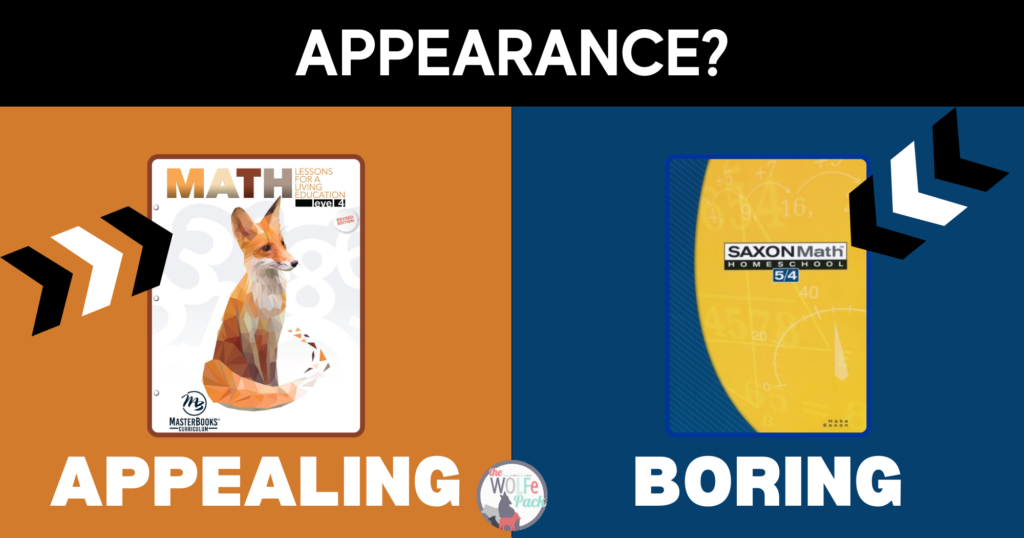
- Minimal Graphics: Saxon Math uses relatively minimal graphics. The focus is on text and numerical problems rather than decorative elements. AKA: Dry and boring.
- Master Books:
- Colorful and Illustrative: Master Books Math uses more color and illustrative graphics.
WORLDVIEW
- Saxon Math:
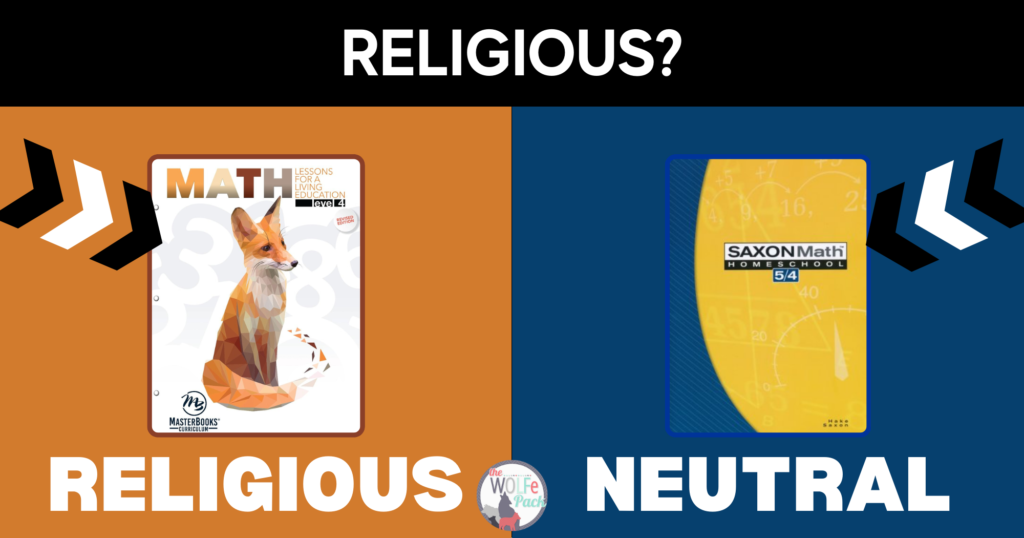
- All of Saxon Math curriculum is faith-neutral.
- Master Books:
- Master Books’s intention is “when we place a Master Books title into someone’s hands, their faith in God and His Word is going to grow.”
COMPONENTS and COST
- Saxon Math:
- For 5/4, you will need a student textbook, tests/worksheets book and solutions manual. These three items often come in a Homeschool Kit and cost around $100.
- Master Books:
- All you need to purchase is one paperback workbook for about $40.

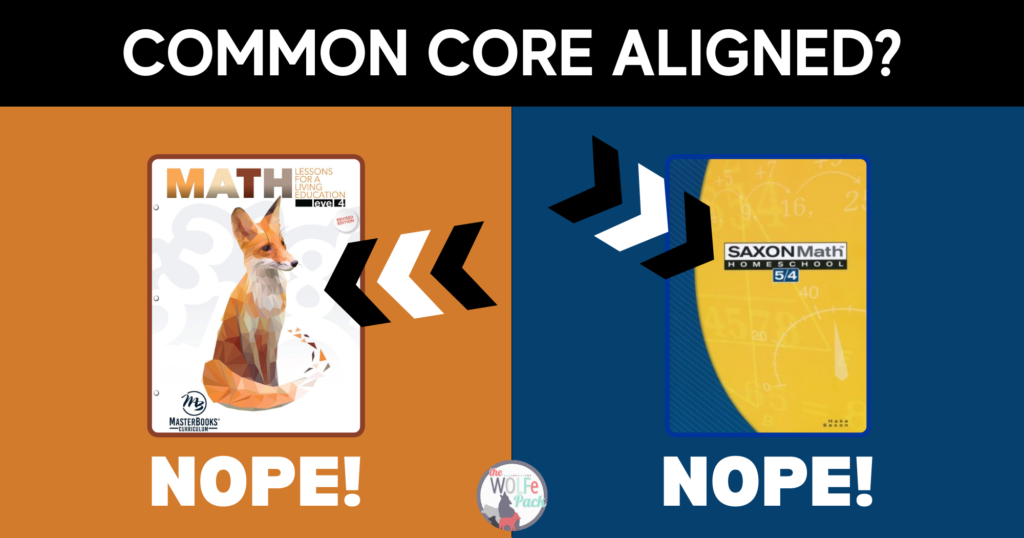
COMMON CORE
- Saxon Math:
- Nope! Created long before Common Core was a thing, Saxon is not officially aligned though it does meet all state standards simply because it’s thorough and rigorous.
- Master Books:
- Nope! Designed for the religious homeschool market, Master Books is not aligned with the Common Core standards.
OLD SCHOOL OR NEW MATH
- Saxon Math:
- I refer to Saxon as “old-school, classic” math. It’s how people were taught “back in the day”.
- Master Books:
- I think of Master Books as old-school math packaged in a new way focused on making the math concepts more real. It might look and sound very different than a more traditional math curriculum, but the math is the same.
FUNCTION
- Saxon Math:
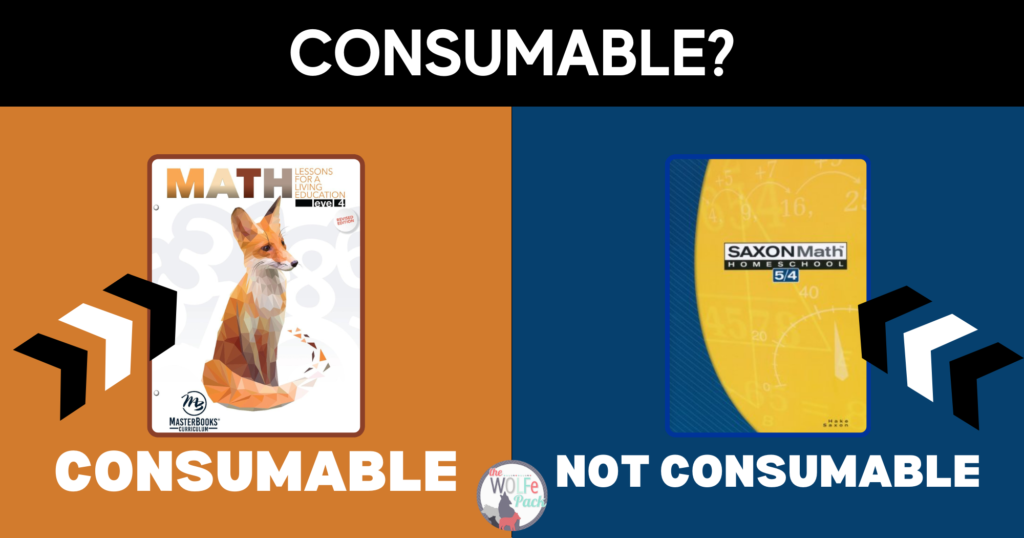
- Except for the tests/worksheets, Saxon 5/4 is not considered consumable.
- Master Books:
- The single Master Books Level 4 workbook is consumable.
WORKSPACE
- Saxon Math:
- Cluttered: Though the pages are perforated as if a student would write on them directly to turn for grading, there is simply not enough space for students to work through problems.
- Master Books:
- Clean: The pages are clean with lots of whitespace for students to work.
Check out the video below to see the workspace of each book.
POSSIBLE STRENGTHS AND DRAWBACKS
- Saxon Math:
- Strong Foundation: The incremental and repetitive approach builds a solid foundation in math, which can be especially beneficial for students who need consistent reinforcement.
- Comprehensive Coverage: Offers thorough coverage of math concepts from basic to advanced levels.
- Established History: Has been around for decades with a long history of good results.
- Repetitive Nature: The repetitive format might be monotonous for some students who prefer variety.
- Rigidity: The structured approach may not suit all learning styles, particularly those who benefit from a more exploratory or creative method.
- Master Books:
- Faith-Based: Integrates a biblical worldview with academic content, which may be appealing for families seeking faith-based education.
- Fairly New: In the big picture, Master Books math is a fairly new curriculum.
- Less Structure: The flexible, integrated approach may be challenging for families who prefer a more traditional, structured curriculum.